
Are you struggling with jaw pain, headaches, chronic neck pain, breathing difficulties or poor sleep? Have you visited multiple healthcare providers but still haven’t found lasting relief? Sometimes, the missing piece isn’t another isolated treatment. It may be a coordinated team of professionals who can look beyond your symptoms to identify and address the factors contributing to them.
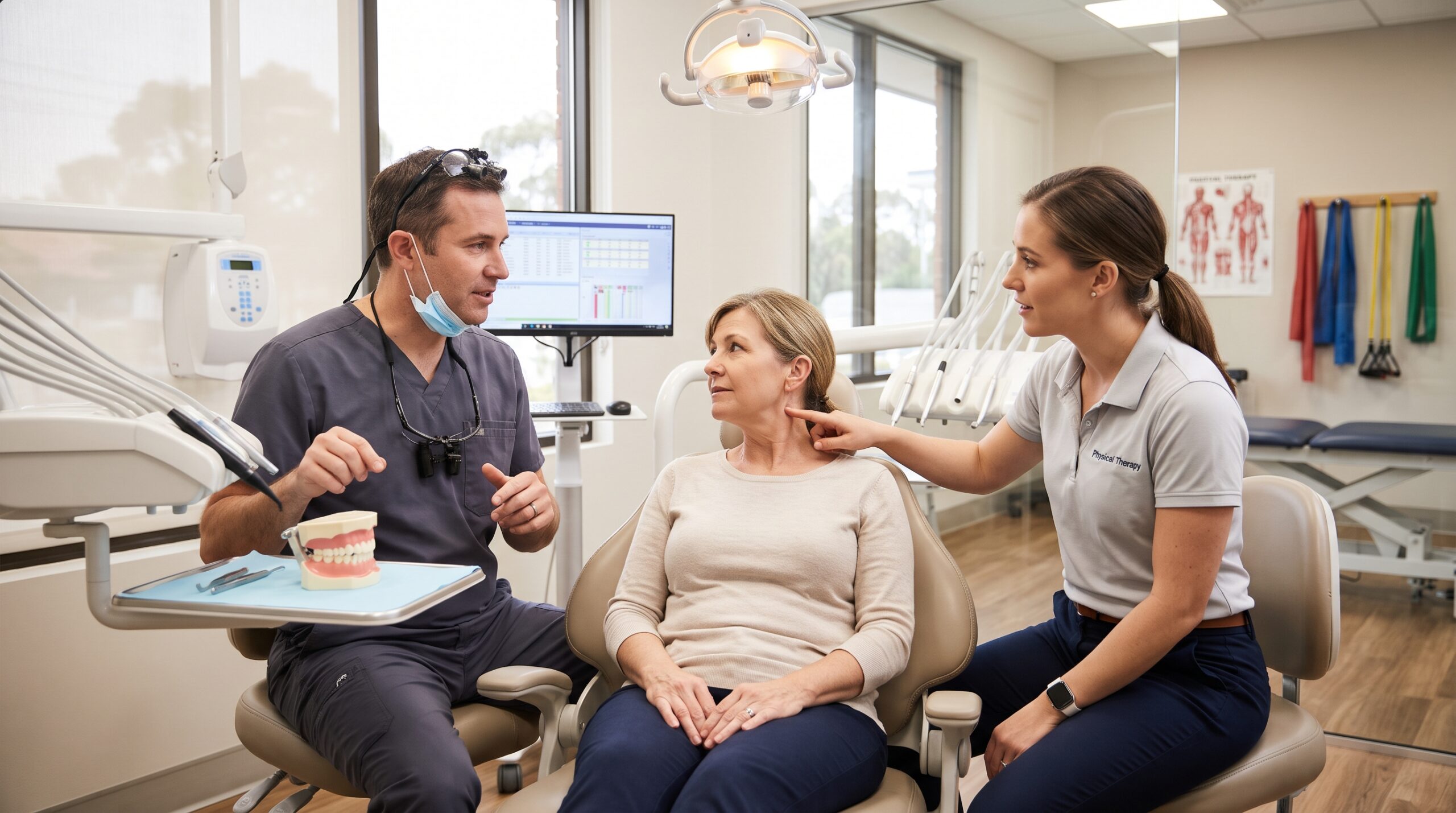
At One 2 One Physical Therapy, we believe that some complex conditions benefit from an interdisciplinary approach. We collaborate closely with airway-focused dentists and orofacial myofunctional therapists to help patients address the interconnected structural, neuromuscular and functional factors that can contribute to pain, breathing difficulties and disrupted sleep.
Why Collaboration Matters
The jaw, head, neck, airway and the rest of your body do not function independently. Restrictions or dysfunction in one area can influence how other parts of your body move, stabilize and function. For some patients, addressing only the painful area may not be enough to achieve their desired results.
For example, someone experiencing TMJ pain may have restrictions in the jaw and surrounding muscles as well as limitations in the neck, spine or rib cage that affect overall movement and muscle function. Similarly, a patient with chronic neck pain or headaches may have underlying breathing dysfunction or airway restrictions that deserve further evaluation.
At One 2 One Physical Therapy, we look at both the local area of your symptoms and how it functions within your entire body. Our comprehensive evaluations help us identify potential contributing factors and determine when collaboration with another professional may be beneficial.
Bringing Physical Therapy and Dentistry Together
We have developed collaborative relationships with airway-focused dentists in the Washington, DC metropolitan area who share our commitment to understanding the underlying contributors to each patient’s symptoms.
Our physical therapists use specialized assessments to identify functional patterns that may warrant further dental evaluation. When appropriate, we coordinate care with these dentists to address the structural and functional aspects of a patient’s condition.
This collaboration is particularly valuable for patients with airway restrictions, narrow palates or other structural factors that may affect nasal breathing, jaw function and oral health. Depending on the patient’s needs, dental treatment may include skeletal expansion procedures such as miniscrew-assisted rapid palatal expansion (MARPE) or oral appliance therapy.
Physical therapy complements these interventions by addressing breathing mechanics, head and neck position, rib cage mobility, postural alignment and neuromuscular function. Orofacial myofunctional therapy may also help address tongue posture, oral rest posture and breathing-related functional patterns.
By combining our respective expertise, we can address multiple contributing factors rather than focusing on just one part of the problem.
The Connection Between Airway, Breathing and Chronic Pain
Breathing is something we do automatically, yet not everyone breathes as efficiently as they could. Nasal airway restrictions, habitual mouth breathing and dysfunctional breathing mechanics can influence how the muscles of the head, neck and rib cage work.
For some individuals, a narrow palate or other structural restriction can limit the space available for nasal airflow. This may contribute to difficulty breathing through the nose and encourage habitual mouth breathing. Nasal obstruction and sleep-disordered breathing can also be associated with snoring, disrupted sleep and daytime fatigue.
Breathing mechanics may further influence the way the neck, rib cage and surrounding muscles contribute to respiration. When breathing is inefficient, some individuals develop compensatory movement patterns or increased muscular effort that may interact with existing neck pain, headaches or jaw dysfunction.
This is where our collaborative approach becomes especially valuable. An airway-focused dentist can evaluate structural factors and determine whether dental interventions, such as skeletal expansion or an oral appliance, are appropriate. At the same time, physical therapy can address the functional adaptations that influence breathing and whole-body mechanics.
For example, expanding the palate may help improve nasal airflow in an appropriate patient. However, that intervention does not automatically resolve every breathing or postural pattern. Our physical therapists evaluate the relationship between the airway, head and neck, spine, rib cage and pelvis to identify additional restrictions or compensations that may benefit from treatment.
Our approach incorporates Postural Restoration (PRI), breathing restoration, manual therapy and orofacial myofunctional techniques as appropriate to the individual. The goal is to support more efficient breathing mechanics and help the body adapt to changes in airway structure and function.
A Team Working Toward Your Goals
Every patient has a unique combination of symptoms, contributing factors and treatment needs. Our goal is to understand the bigger picture, determine which factors may be influencing your condition and collaborate with other professionals when their expertise can contribute to your care.
Whether you are struggling with TMJ dysfunction, headaches, chronic neck pain, breathing difficulties or sleep concerns, a comprehensive evaluation may help identify connections that have not yet been fully explored.
If you are looking for a whole-body approach that considers the relationship between your jaw, airway, breathing and musculoskeletal function, we invite you to schedule an appointment at One 2 One Physical Therapy. We look forward to working with you to better understand your symptoms, develop an individualized treatment plan and help you move toward your goals.